How to Build an Emergency Fund Even on a Low Income
Three to six months of expenses sounds impossible on a tight budget. Here's how to get there step by step — starting with a first milestone you can actually reach.
By the Finance Arabia editorial team4 min read
An emergency fund sounds like something only people with big salaries can afford. In reality, it matters most when money is tight. A car repair, a medical bill, a sudden flight home or a gap between jobs can push you onto a credit card at 30%+ a year — unless you have cash set aside. Here's how to build one step by step, even on a modest income.
Why it matters even more if you live abroad
For expats in the Gulf, an emergency fund isn't just about broken appliances. Your residence visa is usually tied to your job, notice periods can be short, and family emergencies back home often mean last-minute flights. Having cash available gives you time to make good decisions instead of rushed, expensive ones.
1. Set a realistic target
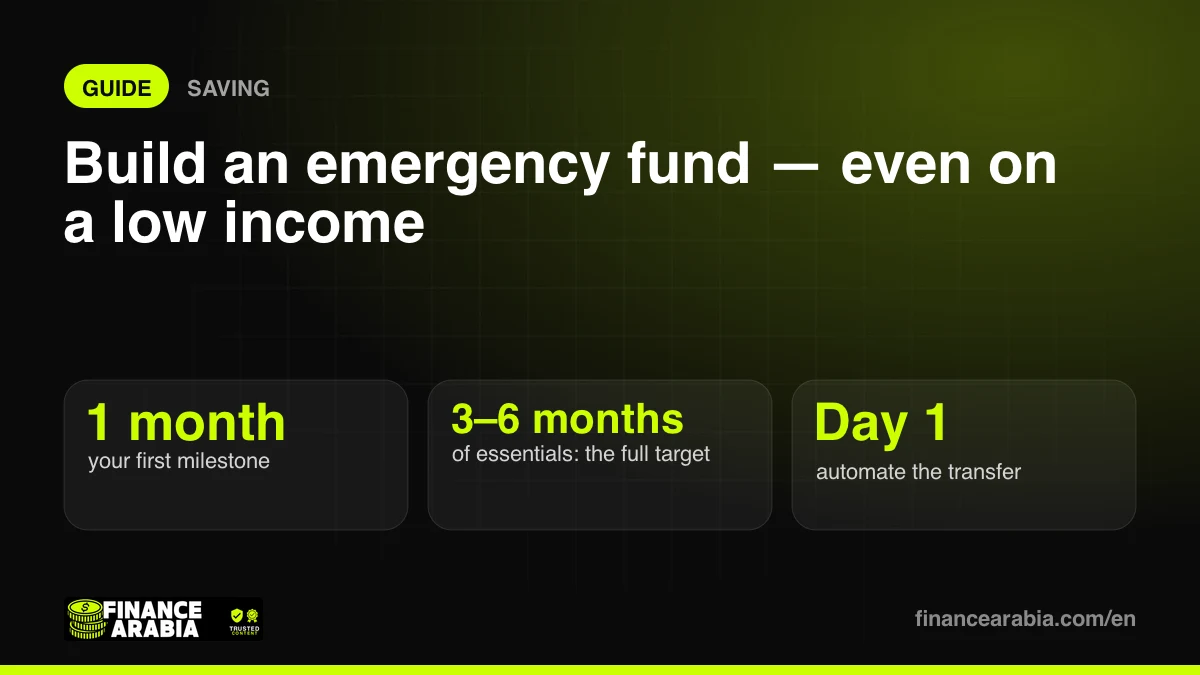
The classic rule is 3 to 6 months of essential expenses — rent, food, transport, bills, school fees and any money you send home. If your job feels less secure or you're the only earner, aim for the higher end.
If that number feels impossible, don't let it stop you. Start with a first milestone of one month of rent or AED/SAR 1,000–3,000, then build from there. The first milestone matters more than the final one.
| Monthly essentials | Starter goal (1 month) | Solid fund (3 months) | Strong fund (6 months) |
|---|---|---|---|
| 5,000 | 5,000 | 15,000 | 30,000 |
| 8,000 | 8,000 | 24,000 | 48,000 |
| 12,000 | 12,000 | 36,000 | 72,000 |
2. Keep it separate
Open a separate savings account — ideally at a different bank from your salary account, or at least without a debit card attached. Money you can't see and can't tap at the checkout is money you won't spend by accident. Many banks in the region offer free savings accounts that pay a little profit or interest; just make sure you can withdraw within a day or two without penalties.
3. Automate small, regular transfers
Set up a standing order for the day after payday. Even AED/SAR 200–500 a month adds up to 2,400–6,000 in a year. Because it leaves your account before you can spend it, you'll adjust to living without it within a couple of months.
4. Plug the small leaks
- Cancel streaming services and apps you haven't opened in a month.
- Check your phone and internet package — you may be paying for data you never use.
- Cook at home a few extra nights a week; delivery fees add up fast.
- Redirect every amount you save straight into the emergency fund, the same day.
5. Put windfalls to work
Bonuses, tax refunds back home, a pay rise, selling things you don't use — move at least half straight into the fund. A single annual bonus can get you to your first milestone in one step.
6. Use a simple budget rule
The 50/30/20 rule is a helpful starting point: around 50% of take-home pay on needs, 30% on wants and 20% on saving. Until your emergency fund is complete, send most of that 20% there. Our budget planner shows how your spending compares in a couple of minutes, and the savings goal calculator tells you how much to put aside each month to hit your target by a set date.
7. Define what counts as an emergency
Write it down: job loss, medical costs, urgent travel for family, essential car or home repairs. A sale, a holiday or a new phone is not an emergency. If you do use the fund, make refilling it your first priority afterwards.
Where to keep it
| Option | Good for emergency fund? | Why |
|---|---|---|
| Savings account | Yes | Safe and available within a day |
| Short-term deposit | Partly | Fine for the part you won't need for a few months, if early withdrawal is allowed |
| Stocks or crypto | No | Can fall sharply right when you need the money |
| Cash at home | Only a small amount | Risk of loss or theft, and no return |
FAQs
Should I pay off debt or build an emergency fund first?
Build a small starter fund (one month of essentials) first, then attack high-interest debt, then finish the full fund. Without any buffer, the next surprise goes straight back on the credit card.
Does my end-of-service gratuity count?
Not really. It's only paid after you leave, and only if things go as planned. Treat it as a bonus, not your safety net — you can estimate yours with the gratuity calculator.
The bottom line
An emergency fund is what stands between a bad week and a debt problem. Start small, keep it separate, automate it — and the habit will matter more than the amount.
Prices, fees and features change often. We check our facts at the time of writing, but always confirm the latest details with the provider. This article is for information only and is not financial advice.