Digital Real Estate Investing in the Gulf: Fractional Ownership, Crowdfunding and REITs
Own a slice of a Dubai rental apartment for a few hundred dirhams. How fractional property, crowdfunding and REITs work — and the risks to check first.
By the Finance Arabia editorial team3 min read
Buying property used to mean a big deposit, a mortgage and a lot of paperwork. Today, regulated digital platforms in the Gulf let you own a fraction of a rental apartment for a few hundred dirhams, while property portals and online tools make buying and selling whole properties far more transparent. Here's how "digital real estate investing" works, the main types, and the risks to understand before you put money in.
What is digital real estate investing?
It covers several different things:
| Type | How it works | Typical minimum |
|---|---|---|
| Fractional ownership | You buy shares in a specific property held in a company or fund; you receive your share of rent and any gain when it's sold | Low (hundreds of dirhams on some platforms) |
| Real estate crowdfunding | Many investors pool money to buy or develop property | Low to medium |
| REITs | Listed funds that own income-producing property; you buy units on a stock exchange | The price of one unit |
| Buying whole property online | Portals and digital processes for searching, financing and transferring property | Full deposit and fees |
Platforms in the region
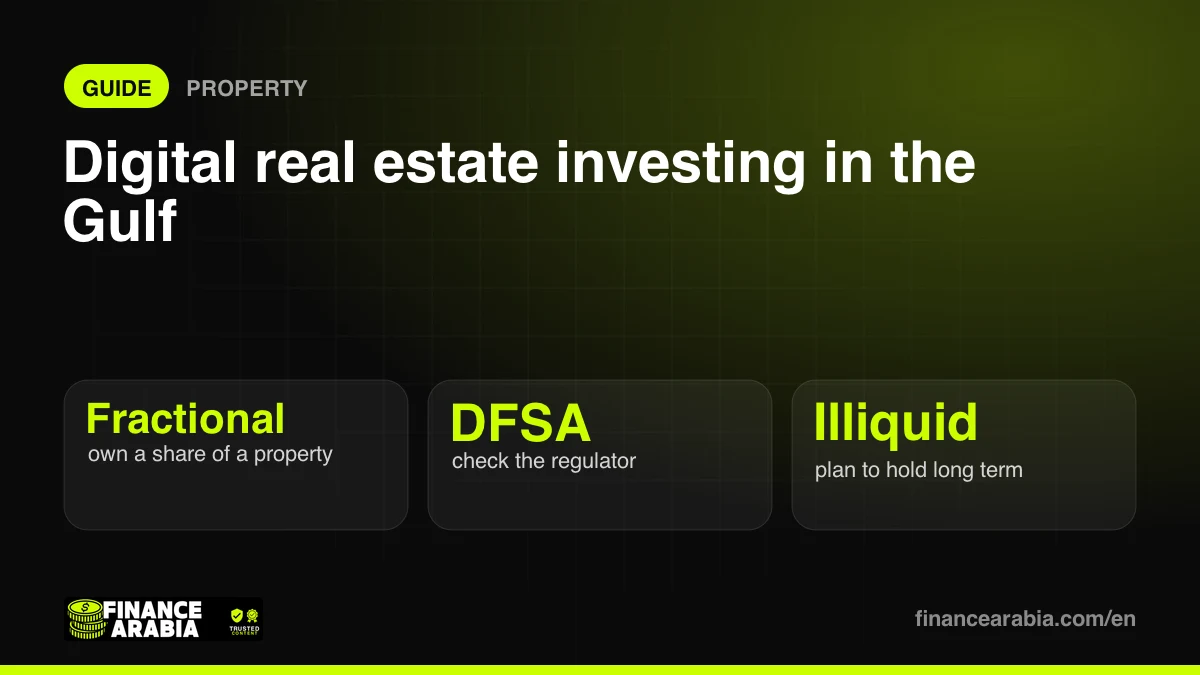
- Stake — fractional ownership of Dubai rental properties, regulated by the Dubai Financial Services Authority (DFSA), with low minimum investments.
- SmartCrowd — Dubai-based real estate crowdfunding, also regulated by the DFSA.
- Property Finder and Bayut — the largest property portals in the UAE for searching, comparing prices and contacting agents.
- REITs listed on Tadawul (Saudi Arabia) and UAE exchanges — buy through any brokerage account.
Mentions are for information, not recommendations. Always confirm a platform's current licence on the regulator's public register before investing.
Advantages
- Low entry point — start with a small amount instead of a full deposit.
- Diversification across several properties or areas.
- No landlord work — the platform handles tenants and maintenance.
- Transparency — rental income and fees reported in the app.
Risks to understand
- Liquidity: you usually can't sell fractional shares instantly. Exit may depend on a secondary market or the property being sold.
- Fees: platform, management and exit fees reduce returns — read them carefully.
- Property market risk: values and rents can fall, and vacancies happen.
- Platform risk: make sure assets are held in a separate legal structure and the platform is properly regulated.
- Projected returns aren't guaranteed. Treat headline yields as estimates.
How to start
- Get your emergency fund and high-interest debt sorted first.
- Decide what share of your portfolio you want in property.
- Check the platform's licence, fee schedule and how exits work.
- Start with a small amount across more than one property.
- Reinvest rental income or take it as cash — and track your real return after fees.
Compare property's projected returns with other options using our compound interest calculator, and keep an eye on inflation's effect with the inflation calculator.
The bottom line
Digital platforms have made property investing accessible to people who could never afford a whole apartment. Choose regulated platforms, read the fees and exit terms, and remember that property is a long-term, relatively illiquid investment.
General information only, not investment advice.
Prices, fees and features change often. We check our facts at the time of writing, but always confirm the latest details with the provider. This article is for information only and is not financial advice.